

Tibor Haller completes his Master's thesis on explainable depression monitoring
Tibor Haller completed his Master’s thesis, Explainable Multimodal-based Depression Awareness at the Edge (PDF), co-supervised with Bernhard Bermeitinger. Congratulations, Tibor!
More than 230 million people live with major depressive disorder, and most automated approaches to detecting it are black boxes: they output a score and, at best, explain it after the fact. Tibor’s thesis takes the opposite route. His CML Framework is white-box from end to end: a layered pipeline that fuses speech and network biomarkers, weighs them by the context they were collected in, and maps them onto the nine DSM-5 indicators of a depressive episode, so every assessment can be traced back, through every intermediate score, to the raw measurement. And it runs on edge hardware, so the sensitive data stays home.
What sets the proof-of-concept apart is the frontend Tibor built around it. The dashboard runs the full analysis, states whether a depressive episode is likely and which DSM-5 indicators support that call, compares runs side by side, and lets you unfold every computation step down to the individual formula, the kind of transparency the field talks about and rarely ships.
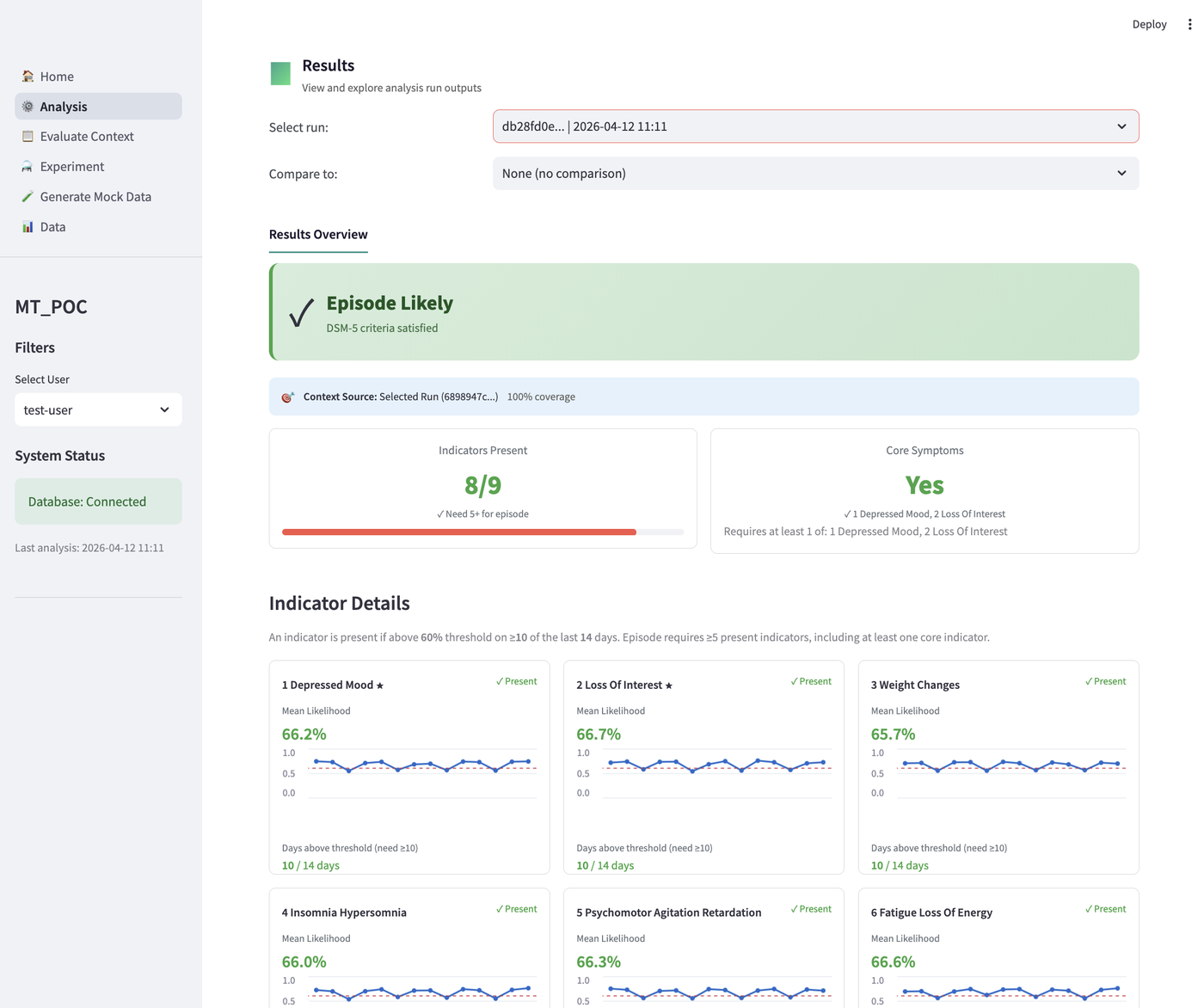
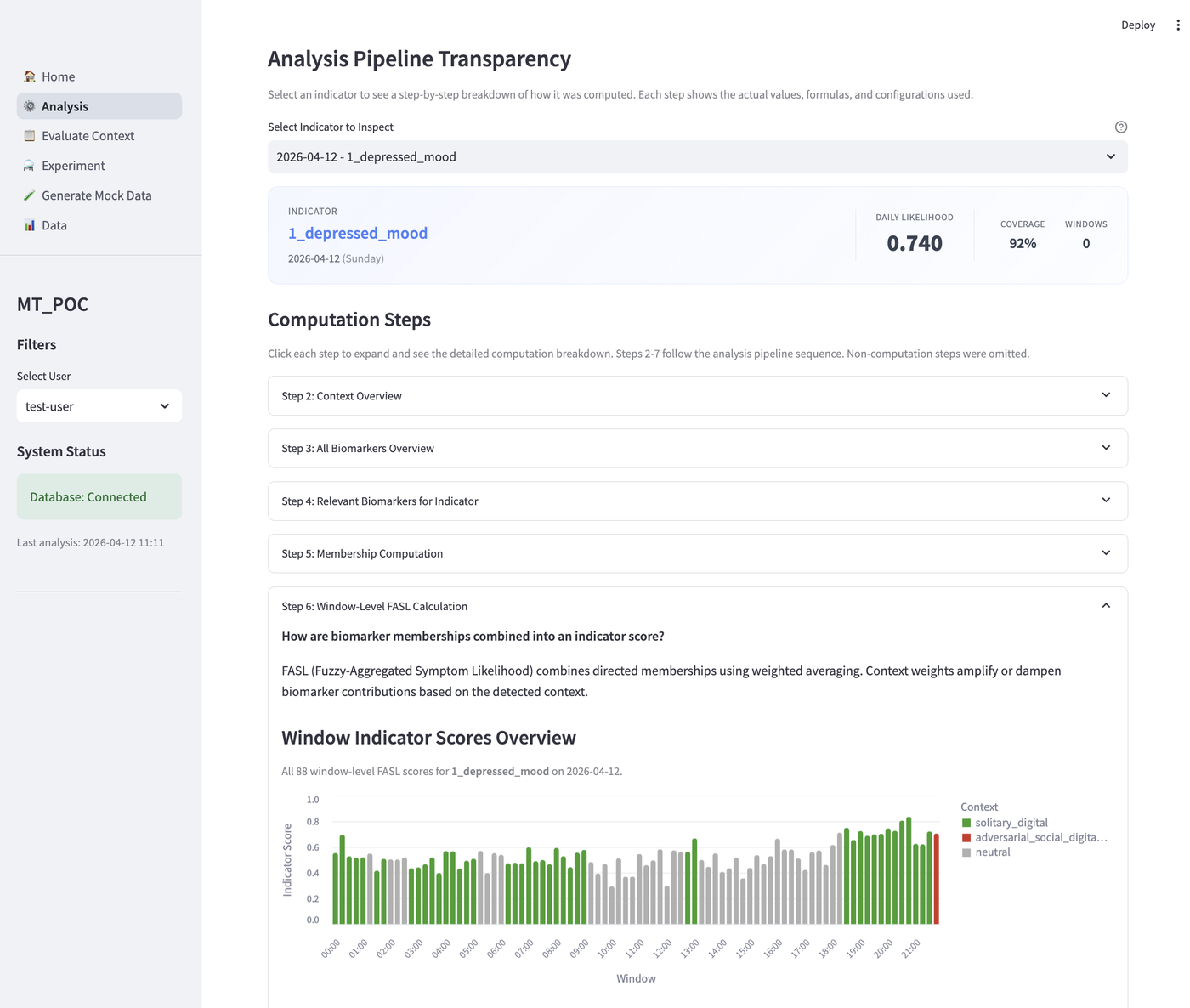
The full proof-of-concept, pipeline and dashboard, is open source, and a video demo walks through the dashboard:
Player not loading? Watch on YouTube ↗
Copy & share
Edit if you like, then copy and paste into your post.