

Tracking the trackers: BLE personal-tracker detection at IEEE ISCC 2026
Our paper Tracking Trackers: ML-based Personal Tracker Detection in Crowded IoT Environments was presented at the 31st IEEE Symposium on Computers and Communications (ISCC 2026), held on 23 to 26 June 2026 in Vilamoura, Portugal. The work is a collaboration with the Communication Systems Group (CSG) at the University of Zurich, and was presented by Katharina O. E. Müller.
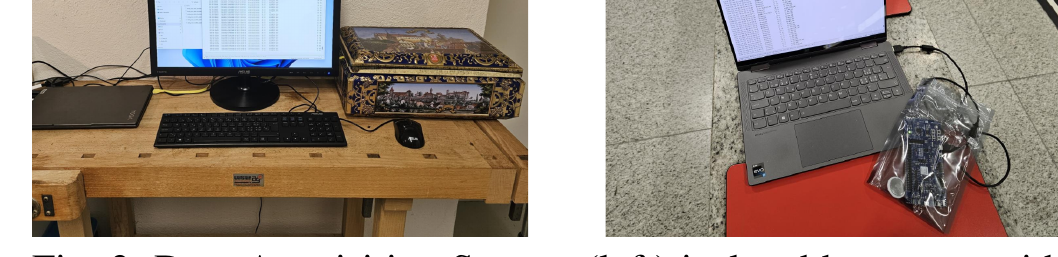
Abstract. Bluetooth Low Energy (BLE) personal trackers offer convenient item-finding services, but they also pose severe privacy risks when misused for stalking in everyday life and crowded environments, such as train stations. Robust, vendor-agnostic detection mechanisms are thus paramount. Our preliminary work demonstrated binary Machine Learning (ML) approaches that distinguish trackers from non-trackers, but these methods fall short in heterogeneous, high-density environments. This paper introduces a categorical ML-based classifier that identifies popular BLE trackers and their operational states. Using a 200-hour dataset, several ML models were trained and compared, achieving over 99% accuracy. The final model was validated in a real-world, high-traffic central station, demonstrating scalability and robustness in urban scenarios. Our findings confirm that accurate, vendor-agnostic classification of BLE trackers in heterogeneous IoT environments is feasible.
Copy & share
Edit if you like, then copy and paste into your post.