

Stefan Krummenacher completes his Master's thesis on self-supervised acoustic monitoring for hydropower
Stefan Krummenacher completed his Master’s thesis, Self-Supervised Transfer Learning for Acoustic Anomaly Detection in Pumped-Storage Hydropower Plants (PDF), advised together with Jinyuan Zhang and co-supervised with Bernhard Bermeitinger, and presented it on 24 September. Congratulations, Stefan!
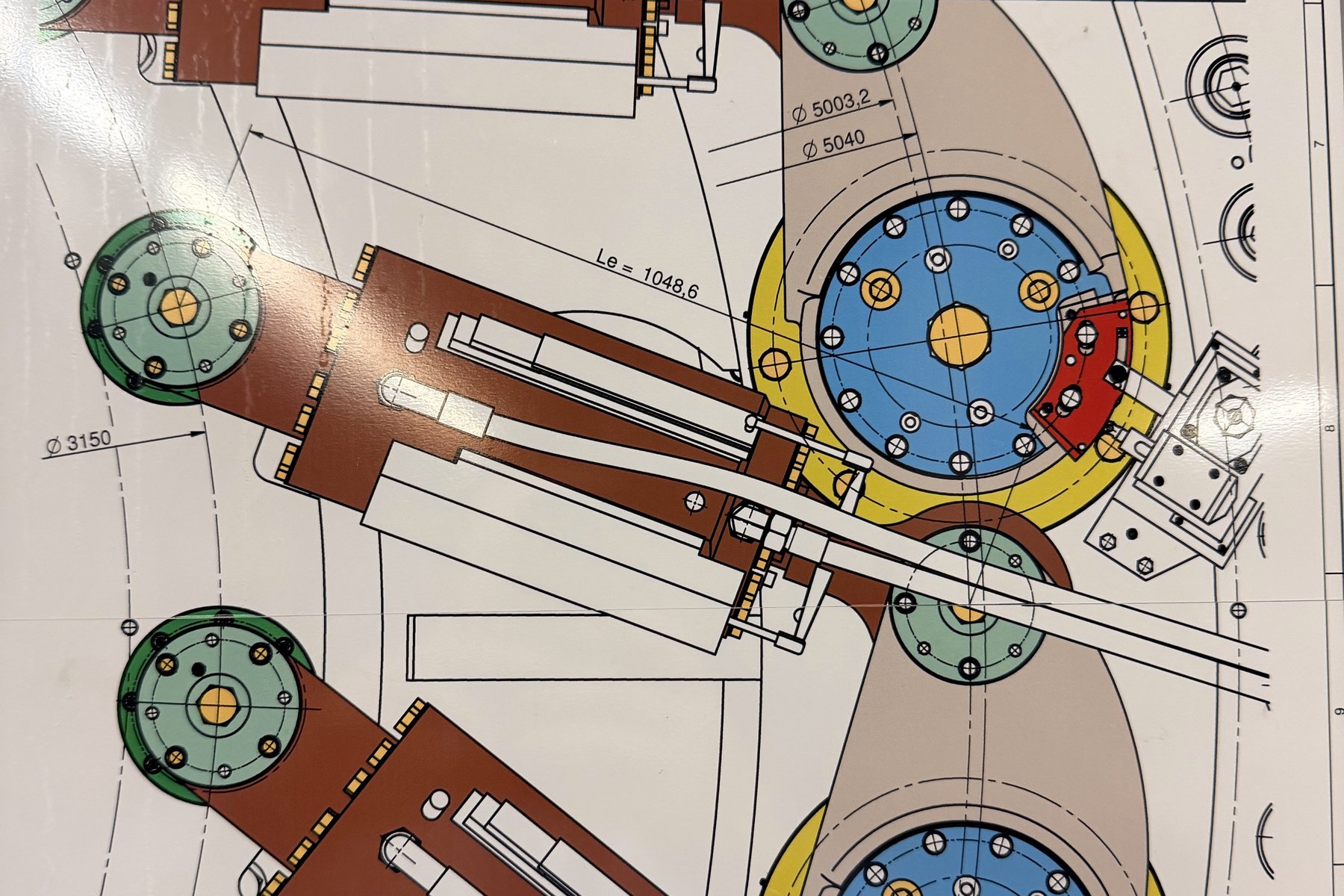
The thesis asks whether sound models pre-trained on large public audio corpora can monitor a pump-turbine when the plant itself offers little training data. The monitor works in two steps: it first recognises the machine’s operating state from audio and vibration, then scores every second of sound against that state’s own normal reference, with a conformal threshold that guarantees the false-alarm rate the operator asked for.
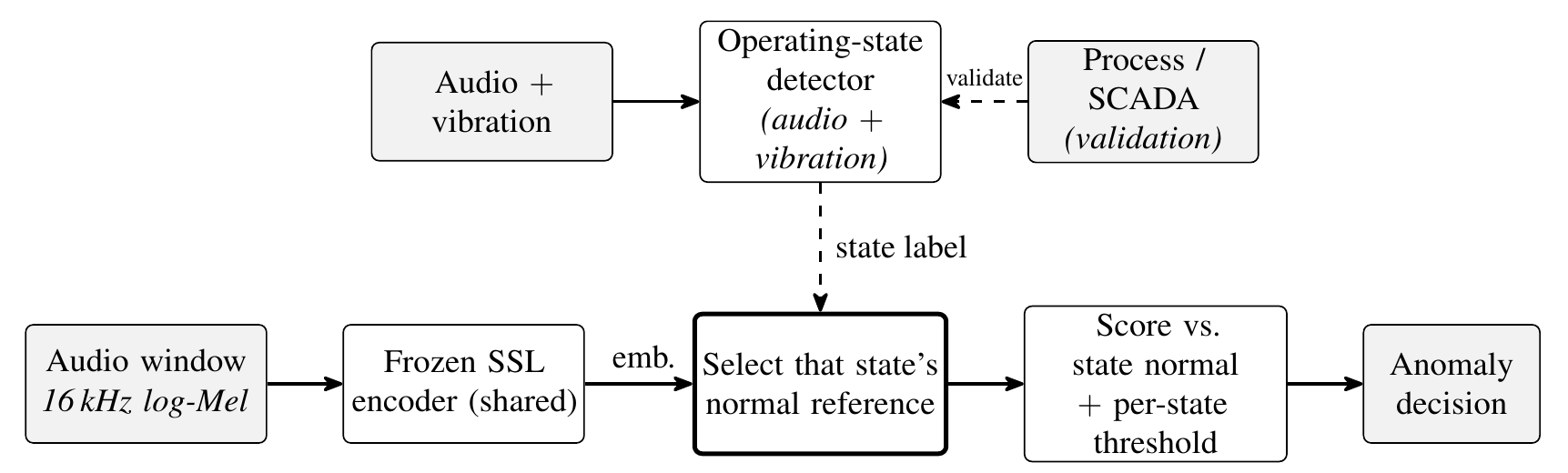
The results are concrete. A frozen, off-the-shelf audio encoder, with no plant training data at all, caught 174 of 180 controlled hammer strikes on the machine, with a median first alarm in under a second, and a distilled 0.78 MB model runs on a plant server without a GPU. The sharper finding is about deployment: what decides whether a monitor stays trustworthy is not the model but how often it is recalibrated. Stefan’s answer is three label-free sentinels that flag when a calibration has expired, which kept the realised false-alarm rate between 2.7% and 7.5% on every held-out day.
The data come from the measurement campaign at Rodundwerk II with illwerke vkw and Gantner Instruments, part of our hydropower condition-monitoring line. The thesis continues Stefan’s earlier work with us: his Integrative Master’s Project with Valentin Huber, and the paper From Noise to Knowledge at the LongevIoT workshop of ACM IoT 2025.
Copy & share
Edit if you like, then copy and paste into your post.