PasWITS: Passive Wireless Intelligence Tracking System
Passive, privacy-preserving sensing of people and activity from the wireless signals already in a space (WiFi, Bluetooth, LiDAR), no cameras and no wearables. The Innosuisse project that seeded the group's WiFi sensing.
How much can you learn about a space from the wireless signals already passing through it, without a single camera and without asking anyone to carry a device? PasWITS set out to answer that. The idea is passive sensing: infer presence, counts, and movement from the WiFi, Bluetooth, and LiDAR signals a space already emits, and turn them into privacy-preserving analytics such as footfall, dwell time, and occupancy.
PasWITS ran from 2020 to 2022, funded by Innosuisse and carried out during Bruno Rodrigues' postdoctoral research in the Communication Systems Group (CSG) at the University of Zurich, together with the industry partner Livealytics AG. It is the direct ancestor of the group’s current work on WiFi channel-state-information sensing.
What it built
PasWITS developed a full pipeline from commodity sensors to activity dashboards, and validated it in real settings, not just the lab:
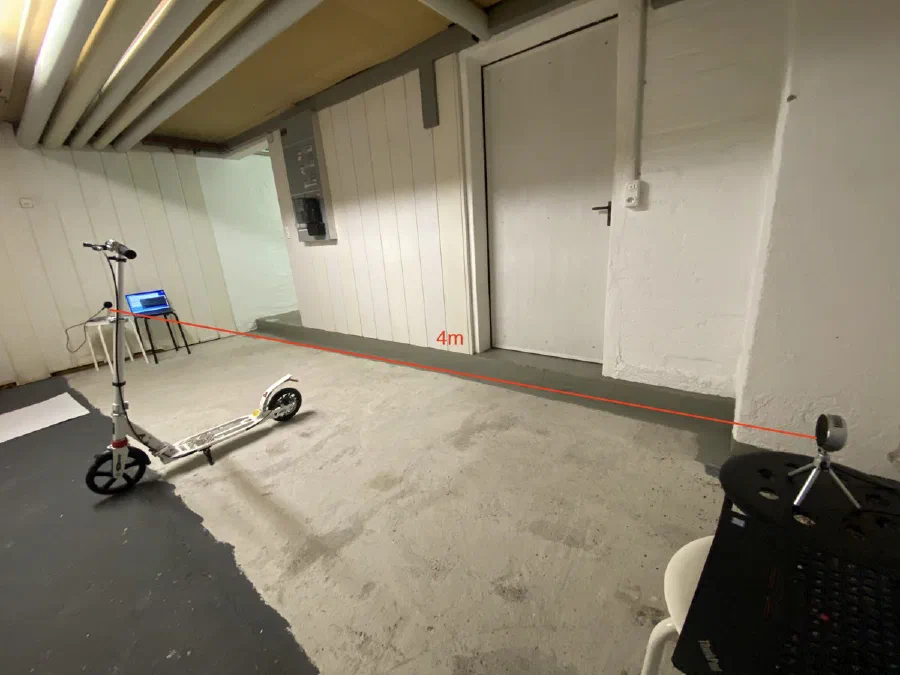
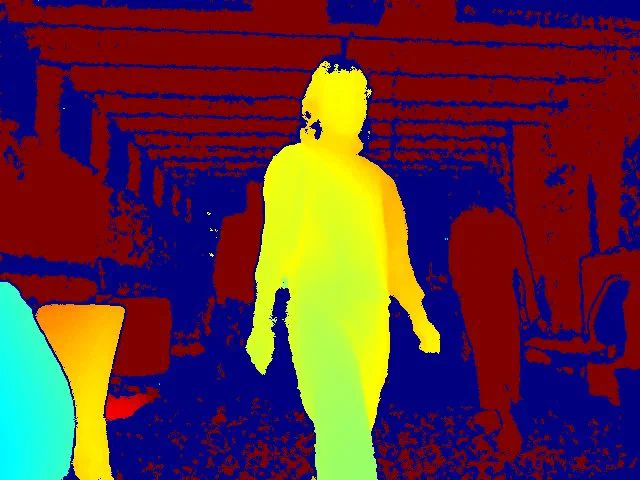
- A multi-modal testbed fusing WiFi, Bluetooth, and LiDAR at the CSG laboratory.
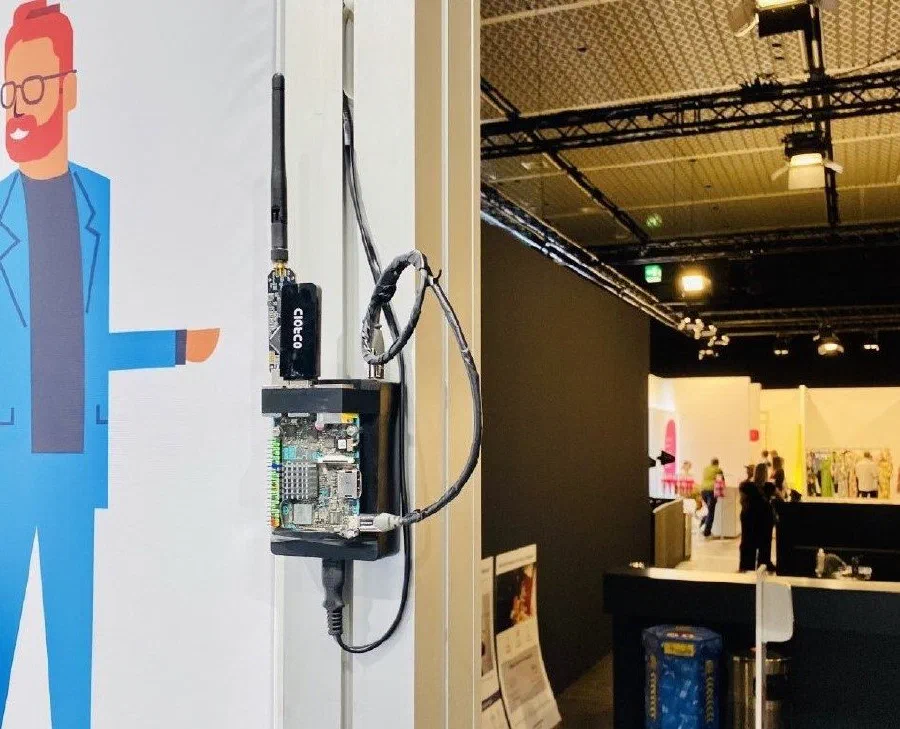
- In-the-wild data collection at a train station and at building entrances, capturing how people move through public and semi-public spaces.
- A privacy-by-design stance: the system counts and tracks without capturing identifiable features, a principle that still guides the group’s sensing work today.
A recurring, and initially surprising, finding shaped everything that followed: naively fusing all available sensors made accuracy worse, not better. Careful selection of which measurements to trust beat using everything at once. That observation is the seed of the group’s current research on measurement selection in dense sensing networks.
The key idea: interest from signal strength
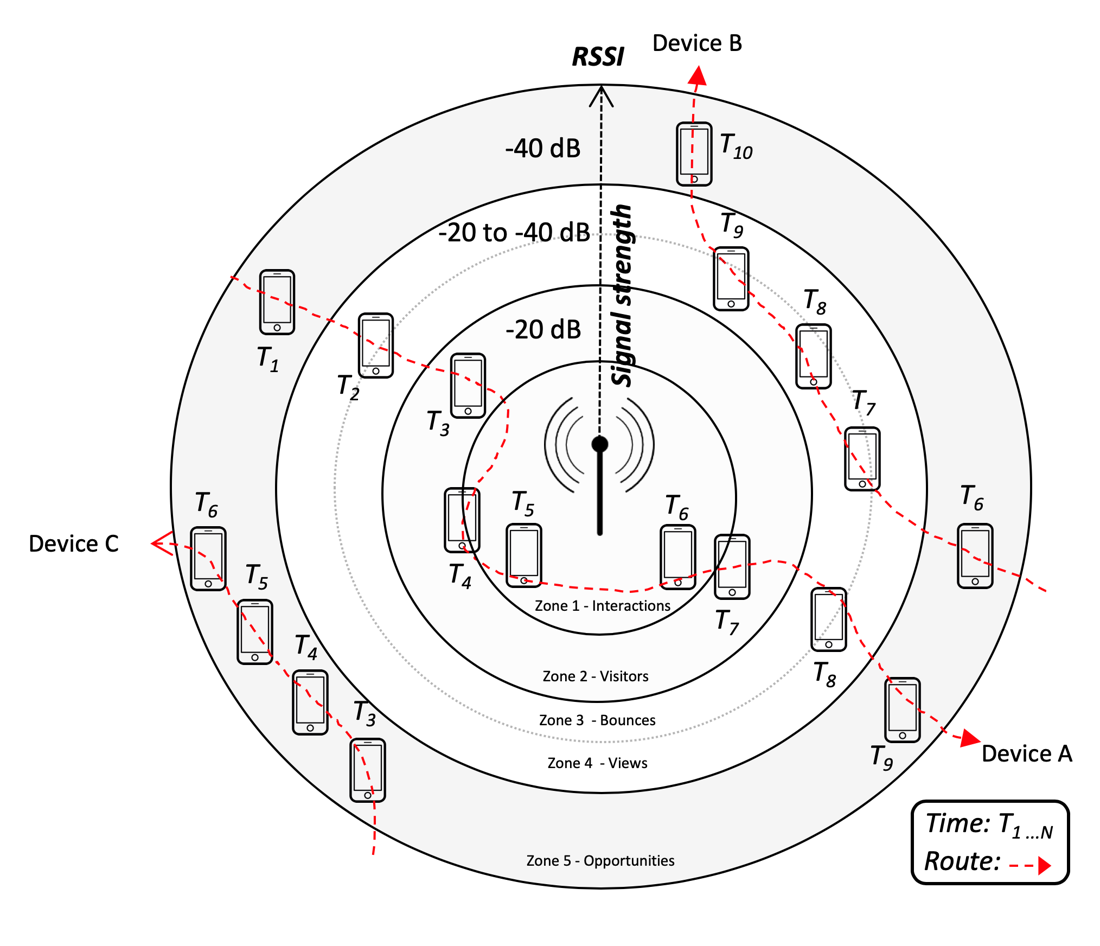
This is what lets passive signals gauge interest, not just presence. For an exhibition or event, it answers the question footfall alone cannot: which spots actually draw people in and hold their attention, measured live and without a single camera.
Publications
PasWITS produced five peer-reviewed publications:
- R. H. Ribeiro, B. Rodrigues, C. Killer, L. Baumann, M. F. Franco, E. J. Scheid, and B. Stiller. “ASIMOV: a Fully Passive WiFi Device Tracking.” IFIP Networking Conference, 2021.
- B. Rodrigues, C. Halter, M. Franco, E. J. Scheid, C. Killer, and B. Stiller. “BluePIL: a Bluetooth-based Passive Localization Method.” IFIP/IEEE International Symposium on Integrated Network Management (IM), 2021.
- B. Rodrigues, L. Müller, E. J. Scheid, M. F. Franco, C. Killer, and B. Stiller. “LaFlector: a Privacy-preserving LiDAR-based Approach for Accurate Indoor Tracking.” IEEE Conference on Local Computer Networks (LCN), 2021.
- B. Rodrigues, E. J. Scheid, J. Willems, M. Tornow, K. O. E. Müller, and B. Stiller. “FusIon Data Tracking System (FITS).” IEEE Sensors Journal, 22, 2022.
- B. Rodrigues, E. J. Scheid, J. Willems, and B. Stiller. “PMD-Track: Portable Medical Devices’ Real-time Inventory and Tracking.” Wireless On-Demand Network Systems and Services Conference (WONS), 2022 (extended as a hands-on experience at IEEE/IFIP NOMS, 2023).
Read the full project report (PDF) (Rodrigues, Stiller, Müller, and Tuck, 2022), also archived at HSG Alexandria.
What the group builds on it
PasWITS established the group’s core competencies in distributed, privacy-preserving sensing, and its questions carry straight into current work: the WiFi CSI mesh testbed and OpenCSI calibration layer, the privacy-preserving framing of CareNet, and the measurement-selection problem now studied on a 14-node CSI mesh. Several open thesis topics continue this line directly.
From the project